Families Advancing Literacy and Language Lab
Miguel Garcia-Salas, Ph.D.
Biography
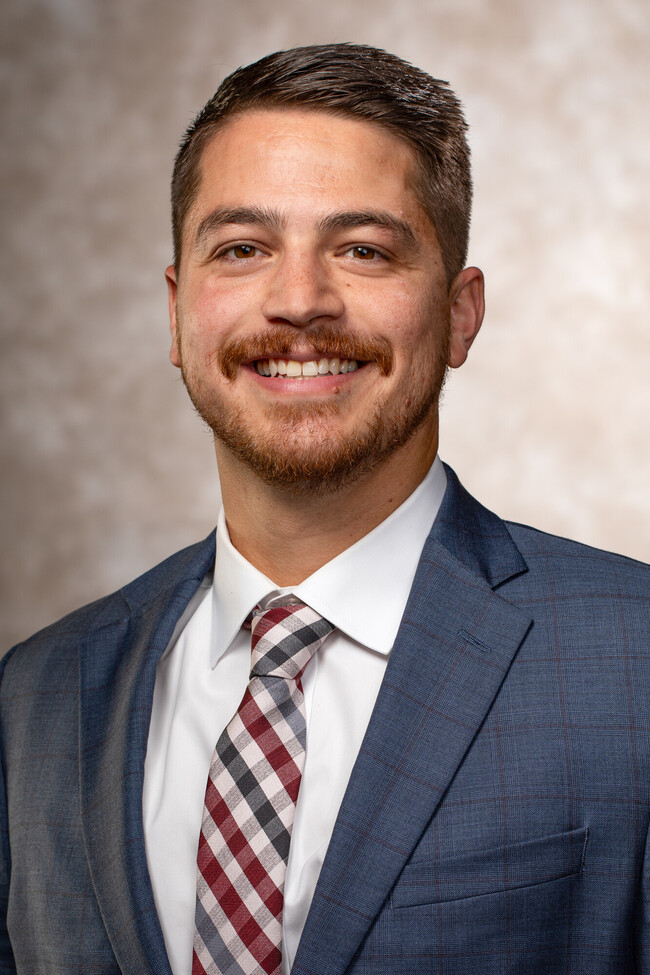 Miguel Garcia-Salas is an assistant professor in the Department of Communication Disorders and Occupational
Therapy at the University of Arkansas. His research focuses on collaborating with
families and community organizations to support the language and literacy development
of children with or at risk for language and reading disorders, with particular attention
to culturally and linguistically diverse and vulnerable communities.
Miguel Garcia-Salas is an assistant professor in the Department of Communication Disorders and Occupational
Therapy at the University of Arkansas. His research focuses on collaborating with
families and community organizations to support the language and literacy development
of children with or at risk for language and reading disorders, with particular attention
to culturally and linguistically diverse and vulnerable communities.
Dr. Garcia-Salas’ work is grounded in family-centered and culturally responsive frameworks that challenge deficit-oriented perspectives of marginalized populations. Rather than focusing solely on barriers, his research emphasizes identifying and leveraging family strengths to design accessible, sustainable, and practical resources and recommendations that can be implemented in home and community settings.
Lab Research Summary
Research conducted in the Families Advancing Language and Literacy (FALL) Lab focuses on understanding how families support children’s language and literacy development and on designing interventions and resources that build on family and community strengths.
Strengths-based, community-engaged research with vulnerable populations — The FALL Lab conducts strengths-based, community-engaged research with vulnerable populations, including unhoused families and migratory families, to understand how families want to learn about supporting their children’s language and literacy development. Through interviews, surveys, and collaborative design activities, this work examines what information families value, why it is meaningful, and how resources can best fit within their lived experiences. Findings from these partnerships have directly informed the creation of multiple, evolving iterations of family-centered resources that continue to be refined and scaled in response to family feedback and community needs.
Familial shared book reading and family routines — A core focus of the FALL Lab is examining how shared book reading and everyday family routines can be leveraged to promote children’s language and early literacy development. The lab has explored dialogic reading and other evidence-based strategies, with an emphasis on identifying what works for whom and under what conditions. This research not only evaluates child outcomes but also seeks to improve how families use shared book reading strategies in authentic, routine-based contexts.
Innovative and accessible family resources — The FALL Lab designs and evaluates innovative and accessible resources to support families’ use of evidence-based language and literacy practices. This work includes the creation and evaluation of the Dialogic Reading Education through Accessible Modules (DREAM) program, as well as ongoing exploration of other technology-enhanced solutions. Across projects, the goal is to ensure that family-focused tools are not only accessible but also effective and efficient in supporting sustained familial practice.
Student impact — Undergraduate and graduate students are actively involved in all stages of the research process, including literature review, community partnership development, data collection, analysis, and dissemination. Students in the FALL Lab gain experience working with children and families, applying diverse research methodologies, and translating research findings into practice-oriented resources. Students regularly present their work at regional and national conferences.
2025-2026 lab members — Callie Gottsponer, Jenna Burns, Melanie Magana
Selected Publications
Garcia-Salas, M., Torres-Chavarro, M., & Wood, C. (2025). Exploring shared book reading perspectives and practices in migratory and unhoused families: A strengths-based analysis. — Communication Disorders Quarterly — . — https://doi.org/10.1177/15257401251363970 —
Garcia-Salas, M. & Wood, C. (2024). Fostering dialogic reading through older siblings in immigrant Latino families: A pilot study. — Topics in Early Childhood Special Education — . 1-14, — https://doi.org/10.1177/02711214241281384 —
Wood, C., Garcia-Salas, M., & Schatschneider, C. (2023). Examination of an automated procedure for calculating morphological complexity. — American Journal of Speech-Language Pathology. 32 — (5), 2322-2330. — https://doi.org/10.1044/2023_AJSLP-23-00044 —
Lugo, V., Wood, C., Torres-Chavarro, M., & Garcia-Salas, M. (2023). Barriers to graduate applications: Perspectives of undergraduate students from underrepresented backgrounds in communication science and disorders — . Perspectives of the ASHA Special Interest Groups. 8 — (4) 729-740. — https://doi.org/10.1044/2023_PERSP-22-00142 —