Speech-Language Pathology
Speech-language pathologists are professionals who diagnose and treat communication and swallowing disorders. They work with individuals across the lifespan, from children with speech delays to adults recovering from strokes. SLPs help patients improve their speech, language, cognitive communication and swallowing abilities. The American Speech Language Hearing Association is the national professional and credentialing organization for speech-language pathologists.
A master’s degree is required to become an SLP, followed by licensure based on state requirements. SLPs work in a variety of settings including, but not limited to, schools, hospitals, preschools, rehabilitation centers and research centers. ASHA has resources for graduate students in the field.
For those with a bachelor's degree, becoming a Speech-Language Pathology Assistant (SLP-A) is an option. SLP-As work under the supervision of licensed SLPs, providing therapeutic support. ASHA has resources for undergraduates as well as a poster (PDF) summarizing what it takes to become an SLP-A.
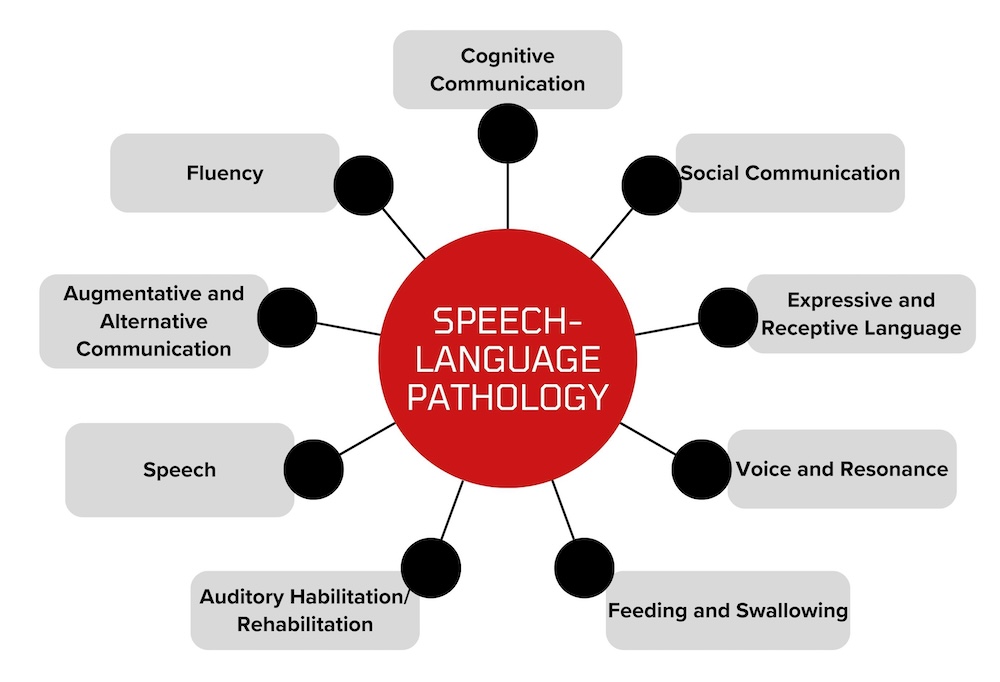
The list of practice areas in the figure — auditory habilitation/rehabilitation, augmentative and alternative communication, cognitive communication, expressive and receptive language, feeding and swallowing, fluency, social communication, speech, and voice and resonance — are not comprehensive. Please refer to the ASHA Practice Portal for additional information regarding additional practice areas for the field of speech-language pathology.